Writing
Every studio sends work the same bad way
A drive folder, a dead link, and a thread nobody can follow. Nobody designed this. It accumulated.
Every studio I know delivers work the same way, and it is the same bad way.
A shared drive folder. A link pasted into an email. Then a second link, because the first one pointed at a draft. Then a thread where the client asks which file is final, and someone scrolls back through three weeks of messages to find out.
Nobody designed this. It accumulated.
What is actually wrong with a folder link
It is worth being precise, because "just use Drive" is a reasonable-sounding objection and the problems are specific.
A folder has no state. A file is in it or not. There is nowhere to say approved, superseded, awaiting feedback — so that information lives in the email thread instead, where it goes stale and cannot be searched by anyone who joined late.
Permissions are a setting, not a guarantee. "Anyone with the link can view" is one wrong click from "can edit", and the wrong click is usually made at speed, at the end of a project, by whoever is sending the final files.
It has no order. A client opening a folder of thirty files has to work out what they are looking at. A deliverable is not just a file; it is a file plus what it is, which version it is, and whether they are meant to do something about it.
It ages badly. Six months later the client wants the master. The folder has been reorganised, the person who set it up has left, and the link in the email is dead.
What we built instead
We built Presently because we needed it, then shipped it as a product because every studio we spoke to had the same problem.
One workspace per client, isolated by design. Not a shared drive with careful folder permissions. Separate by construction, so there is no configuration that could accidentally show one client another client's work.
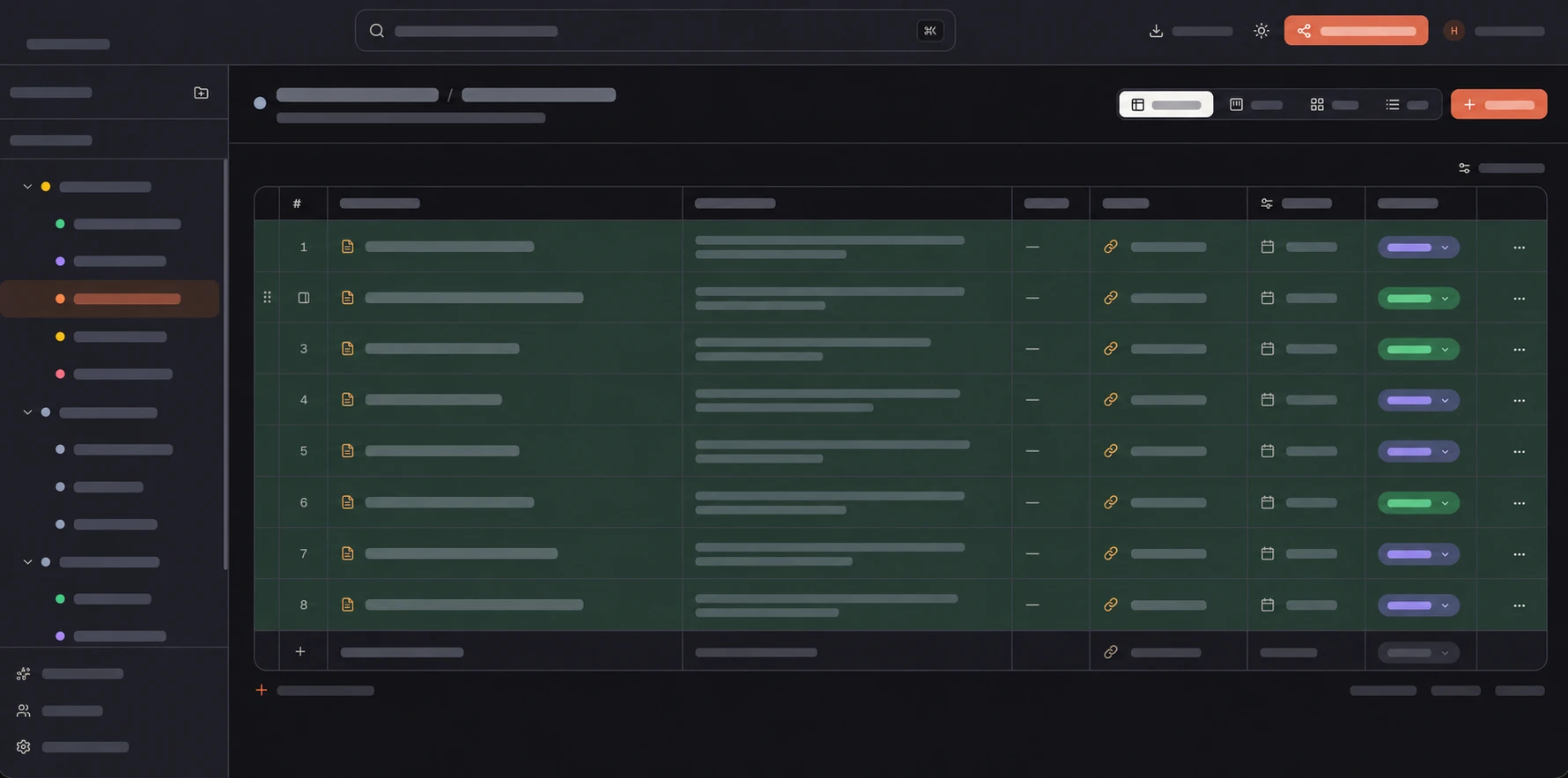
Every folder is a register. A structured table of deliverables with status, links, notes and history. The state of the project is visible on the page rather than reconstructed from a thread.
A link with no signup. Clients do not want an account with your studio. They want to open the thing. Asking a client to create a password to look at their own logo is a small insult that everyone has stopped noticing.
Read-only by enforcement, not by interface. This distinction matters more than it sounds. Hiding the edit buttons is a design decision that a determined request can walk around. Enforcing it on the server is a guarantee. If a portal tells you a client cannot change something, ask which of the two it means.
The part I did not expect
The register changed the conversations, not just the file handling.
When status is visible, "where are we on this" stops being a question. When history is visible, "I thought we approved the other one" stops being an argument. A surprising share of client friction turns out to be an information problem wearing a relationship problem's clothes.
What I would tell a studio still using a folder
Count the links you have sent twice. That number is the cost of the current system, and most people have never added it up.
Decide what a client should see in ten seconds. What is new, what needs them, what is final. If your delivery method cannot answer those three without scrolling, it is not a delivery method.
Do not make them sign up. Every account you require is a chance for the client not to look at the thing you spent a month making.
Ask what happens in a year. Not at handover — a year later, when a new marketing manager asks for the master file. Whatever answers that question is your real delivery system, and if the answer is "search my email", you do not have one.
Build it or buy it, but stop improvising it. We built ours. It is at presently.ayuvam.com if it is useful to you. The important part is not which tool — it is that sending a client their work is a product surface, and it is usually the last thing they experience before deciding whether to hire you again.